Chapter 6
Tracking and scaling B2B content marketing



This guide is meant as a comprehensive resource for B2B SaaS marketers looking to sharpen their content marketing chops and use content as a lever to drive business growth.
If you wish to:
Then this is the guide for you.
We’ll cover everything crisply and to-the-point, sharing actionable tips and resources you can implement right away to boost your SaaS brand’s organic visibility, traffic, and conversions.
Use the ToC below to jump to a chapter of your choice.







B2B content marketing is a strategic approach to creating and distributing valuable, relevant, and consistent content to attract and retain a clearly-defined audience — and, ultimately, to drive profitable action from that audience.
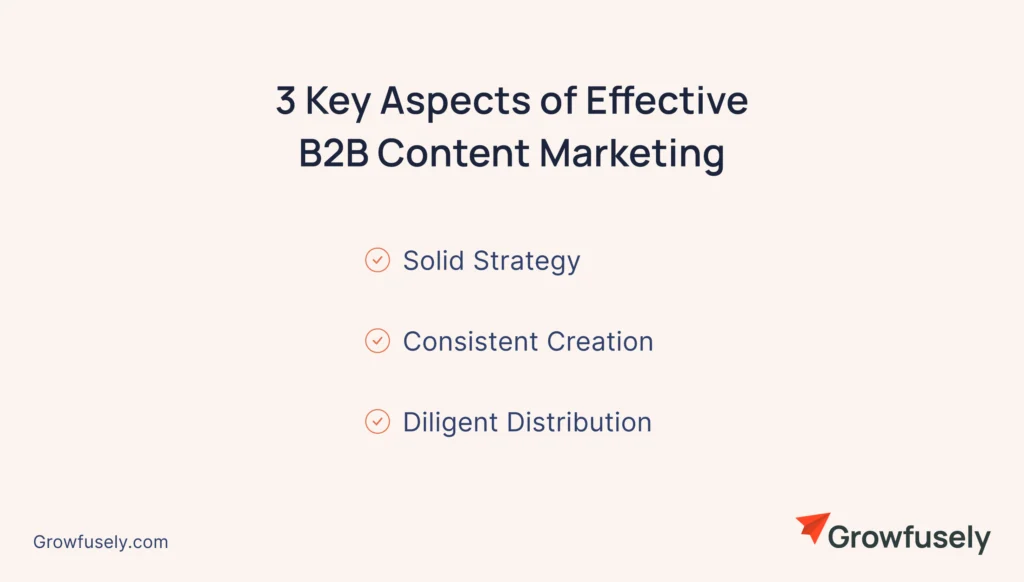
At the heart of effective B2B content marketing lies three key aspects:
Since their inception, big B2B SaaS brands like HubSpot and Ahrefs have relied on content marketing as a means to demonstrate industry authority, solve problems, and help other businesses succeed in their ventures.
When you consider the tremendous growth of these SaaS brands, you know for sure that B2B content marketing is a worthwhile investment (when done consistently!). Just how worthwhile? We’ll get to that in the next chapter.
For now, here’s a good question: how does B2B content marketing differ from the usual, B2C content marketing?
For B2C companies, the audience is typically pretty broad. Their content needs to reach the end customer that might be interested in trying their product (this could be backed by genuine need and research or on a whim).
On the other hand, B2B content targets other businesses and typically focuses on decision-makers within those businesses. These individuals require logical, data-driven content to justify their business decisions.
Moreover, a typical B2B buyer’s journey involves purchase decisions that are often lengthy and complex. That is, the B2B purchasing process often involves multiple stakeholders and a longer sales cycle, necessitating content that supports a longer decision-making process.
Certain content formats work better for B2B companies, too. This includes blog articles, email nurturing sequences, webinars, case studies, and white papers. The tone and style of content needs to be more pragmatic and professional, as opposed to B2C content marketing where fun or emotional content may work well.
Also, B2B content marketing comes with its own fair share of challenges:
But with a strategic approach (which we’ll walk you through in the coming chapters), you can tackle these challenges and ensure your content drives results for your business.
Planning, creating, and promoting content consistently is a substantial investment of time and effort.
But when done right, it drives dollars: 58% of B2B marketers say content marketing enabled sales and revenue in the last 12 months (up from 42% in 2023).

Here are just a couple of many reasons why B2B companies are increasingly investing in content to market themselves:
As a SaaS content marketing agency, we’ve been doing B2B content marketing for over six years. We have helped 40+ B2B brands organically scale their business via content marketing.
For instance, we’ve helped JetOctopus (a B2B SaaS technical SEO platform) generate 100% organic traffic growth in six months via long-form guides and journalistic-style experts-led articles. These pieces served as linkable assets which ultimately helped double the number of referring domains and SERP impressions. Another case in point is Whatfix (a B2B digital adoption platform), an enterprise we’ve helped achieve a 5x increase in referring domains via guest post contributions that earned them 250+ high-quality backlinks — ultimately leading them to achieve and retain first page rankings on Google.
And so, we know firsthand the value of B2B content marketing for both budding startups and established enterprises.
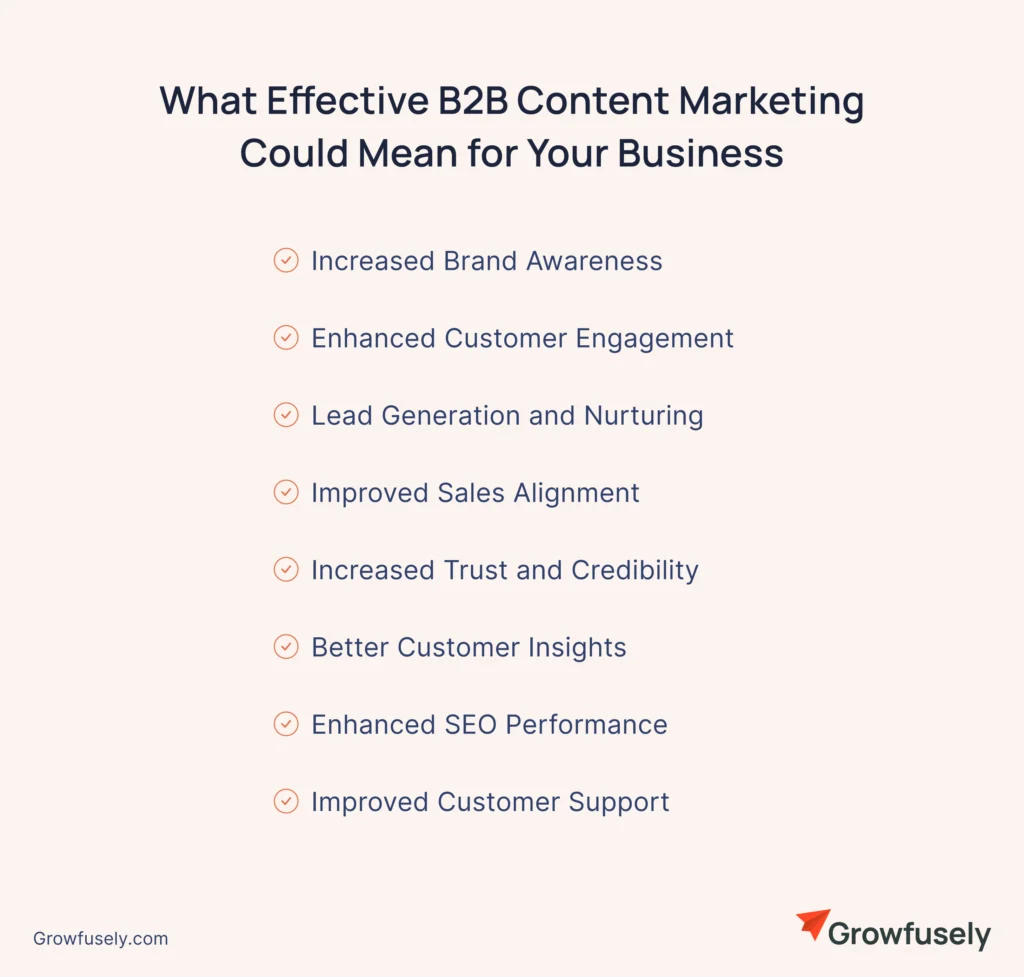
Put simply, here’s what effective B2B content marketing could mean for your business:
So, where do you begin? It’s time to lay the groundwork.
Some of the best experiences in life are often impromptu and spontaneous, but that’s usually not the case with B2B content marketing. Your content will work well only when it’s backed by a good strategy.
It all begins with defining your content marketing goals: what do you want your content to accomplish? Is it:
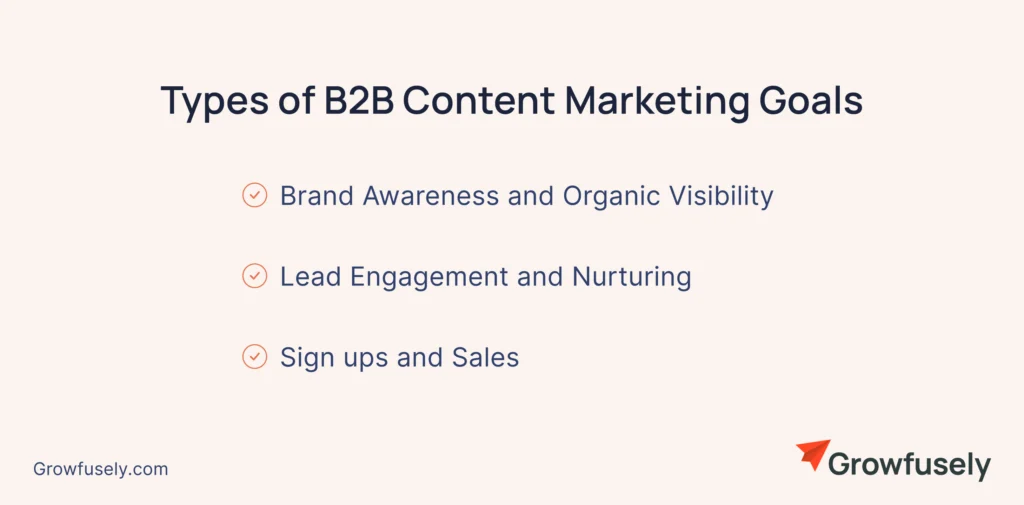
Each of these goals focuses on different stages of the buyer’s journey, utilizing specific types of content tailored to the needs and behaviors of potential customers at each stage. Based on your immediate and long-term goals, you need to pick your metrics and content formats to focus on.
Next, understanding the current state of your content is key. A content audit involves reviewing all your existing content to assess its quality, relevance, and performance. This process helps identify gaps in your content library and opportunities for improvement.
Using a tool like Semrush, you can inventory your content. Use its Content Audit tool to gather a comprehensive list of the pages on your site. It can automatically categorize content based on metrics like age, page views, and metadata, giving you a clear overview.
Examine key performance indicators such as organic traffic, backlinks, social shares, and keyword rankings for each piece of content. This analysis helps identify your existing high-performing content and areas that need improvement.
Review whether the content aligns with your current marketing goals and audience needs. Decide whether each content piece should be kept, updated, or removed based on its performance and relevance.
Based on the insights gained, create an action plan for updating content. This could involve rewriting outdated articles, improving SEO for underperforming pages, or creating new content to fill gaps.
Simultaneously, thorough audience research is imperative. Knowing exactly who your content’s audience is, understanding their needs, pain points, and content consumption habits will allow you to create content that truly resonates.
For this, you can use a dedicated audience research tool like SparkToro that analyzes data from across the web and social media to provide insights into the websites your audience visits, their social behaviors, the hashtags they use, and more.

Check out this sample audience research report from SparkToro.

Based on the insights, segment your audience into different personas based on specific traits or behavior patterns. This segmentation can help tailor your content marketing strategy to meet the unique needs of each group.
Competitor analysis gives you insights into what works (and what doesn’t) within your industry.
Head over to Google and search for the keyword themes you wish to rank for. You’ll find your top competitors already ranking high for those keywords, perhaps along with industry blogs, forums, and magazine-like publications.
Manually analyze your competitors’ content strategy, the topics they cover, the formats they use, and how they engage with their audience (on X, LinkedIn, YouTube, etc.). Dig deep into the “Resources” section of their websites to see what they’re producing and how frequently. Tools like Semrush can help you see which keywords they rank for and the performance of their content. Learning from their successes and mistakes can help you refine your strategy.
Even today, when Google’s ranking algorithms have evolved to the point where they incorporate AI to collate and reproduce content as snippets, proper keyword research holds a foundational place in your B2B content marketing strategy.
Keyword research helps ensure your content is discoverable and relevant. Identify keywords that your ideal customers are searching for, including pain point keywords, product-specific terms, and industry buzzwords. Focus on a mix of high-volume keywords and long-tail phrases that might have lower search volumes but are highly targeted and less competitive.
Check out the third step on conducting thorough keyword research in our step-by-step guide on designing effective B2B SEO campaigns:

Here are the most important keyword metrics you must take into account when deciding which keywords to target:
Once your goals are set and you understand your audience and the competitive landscape, it’s time to organize your content logically. The pillar-cluster model is an effective SEO strategy where you create a single pillar page that provides a comprehensive overview of a central topic/theme and multiple cluster content pieces that address related subtopics, all interlinked together strategically.
This is a tried-and-tested content structuring strategy (used by big B2B brands like HubSpot) that helps improve search engine visibility, user experience, and positions you as an authority on the subject.

Here’s how you can apply this strategy for, say, an HR management software company:
Pillar Topic: “Comprehensive Guide to HR Management for Modern Businesses”
This broad topic will serve as the central pillar page. It should provide a high-level overview of HR management, including its challenges, trends, and the role of HR software in addressing these issues. The goal is to create a comprehensive resource that captures a wide array of related subtopics, linking to more detailed cluster content.
Each cluster topic addresses a specific question or challenge related to the main pillar topic. These are more focused content pieces that delve deeper into the subjects introduced in the pillar content. Examples for the HR management software might include:
Ensure each cluster topic links back to the pillar page and vice versa. This not only helps with SEO by creating a network of interlinked content but also improves the user’s navigational experience across your site.
By implementing this pillar-cluster strategy, your hypothetical HR management software company can effectively cover a broad spectrum of topics related to HR management while also addressing specific user queries and challenges. This approach not only reinforces SEO efforts but also positions your company as a topical thought leader in the HR tech space.
In the previous chapter, we talked about building topical authority in your niche via the pillar-cluster strategy. We also covered how you can conduct keyword research and ideate different types of cluster content that align audience pain points with your product.
Now, a key ingredient in the effectiveness of it all is how valuable and relevant your content actually is. In this chapter, let’s look at how you can write standout content for each stage of the funnel:
Check out the third chapter on Content and the Marketing Funnel in our SaaS content marketing guide to dive deeper into the types and examples of content for each stage of the funnel.
Everyone seeks “quality content” — your competitors, your audience, and you. Let’s break down the elements that make content both high-quality and SEO-friendly:
Google often favors fresh content, so integrating the latest research and continually updating your articles with recent data can help enhance their visibility. Regular revisions not only keep your content current but also relevant to your audience’s evolving needs.
Despite shortening attention spans, there’s still a significant place for long-form content in business blogging. Articles ranging from 1200 to 1500 words or more tend to perform better in organic search rankings, attract more backlinks, and gain greater social media traction. Long-form content allows for:
Aim for depth in every piece you write but avoid filling your content with unnecessary details just to hit a word count.
While covering trending topics can provide short-term engagement boosts, evergreen content — material that remains relevant and valuable over time — is crucial for long-term success. It sustains ongoing interest and continues to drive traffic and leads years after publication.
The most impactful content connects personally with readers, engaging them as if in a one-on-one conversation. This type of content often includes real-life examples, relevant images, statistical data, and personal anecdotes, and avoids corporate jargon, making the material relatable and engaging.
Many emerging B2B brands struggle because their content doesn’t effectively incorporate these crucial elements. Producing mediocre content can be more detrimental than producing none at all, as poor-quality content can damage your brand’s reputation and diminish your standing with both Google and potential customers.
Your eventual goal should be to become recognized as a credible, authoritative resource known for delivering high-quality content. This recognition will ensure your site attracts attention for all the right reasons, helping to establish your brand as a leader in your industry.
If you need inspiration on what valuable, super effective B2B content looks like (following the above checklist), just go through these examples from B2B companies doing it right:
Aim to emulate the quality of content in these examples, and you’ll ensure your content is of the highest standards.
Effective B2B content marketing doesn’t end with content creation. Using your content to gain links to your website and promoting it for maximum reach is how you can ensure your content investment yields the returns you expect.
This chapter provides insights into how to enhance your content’s reach and visibility through effective link-building strategies and distribution tactics.
Recent statistics suggest:
Put simply, having relevant, high-quality websites link to your content is a surefire way to boost your content’s visibility on the SERP and thus, drive more traffic to your website.
There are some tried-and-true strategies to earn backlinks from relevant websites and boost your content’s SEO visibility.
Let’s touch upon them briefly, in the context of our hypothetical HR management SaaS.
Identify reputable HR blogs, industry publications, or professional associations that accept guest contributions. Here’s how:
Ensure your article submissions are all about actionable insights and naturally incorporate a link back to your content or specific landing page.
Guest posting enhances visibility among HR professionals and drives qualified traffic back to your site. Done consistently, it builds your brand’s reputation as a thought leader in the HR tech space.
Quick Tips: Build relationships with editors and content managers at these publications. Regularly contribute articles to create ongoing visibility, and make sure each piece provides genuine value to the audience to encourage them to seek out more information about your software.
Use tools like Ahrefs Site Explorer that can help you find broken links on other websites, such as HR-related blogs and resource pages.
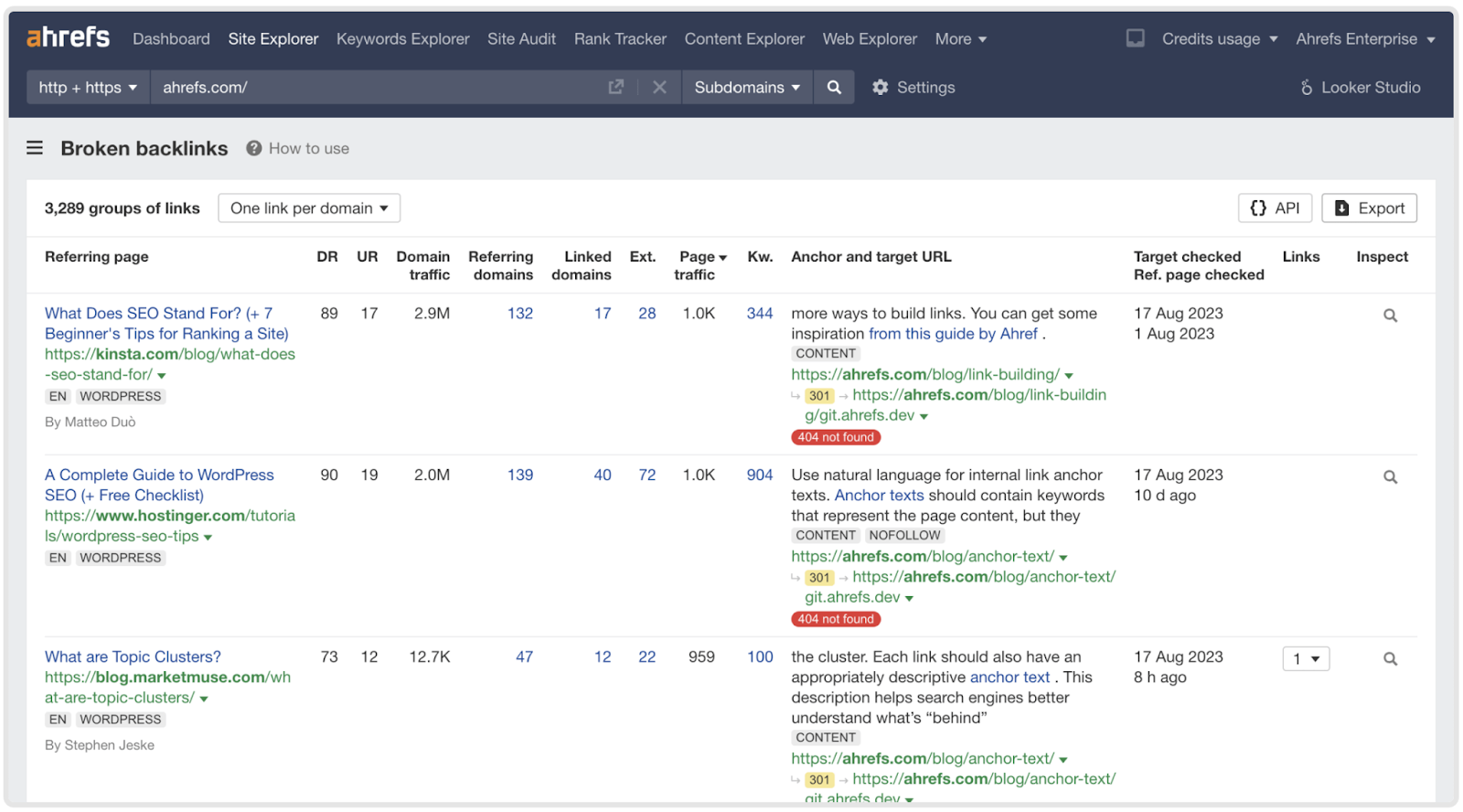
Once you find a broken link, offer your content as a replacement where it provides relevant and valuable information. For example, if a university’s HR resource page has a broken link to an article about “Improving Employee Engagement,” suggest a well-crafted article from your site that discusses how your software enhances engagement through continuous feedback and recognition.
Not only helps in gaining a backlink but also assists in building professional relationships with industry-related academic and professional sites.
Quick Tips: Be respectful and helpful in your outreach, emphasizing the benefits to their audience. Provide a quick and easy way for them to see the value in updating their page with your link.
Develop and launch free tools such as an HR compliance calendar, payroll calculator, or a template for employee development plans that HR professionals can use. Promote these tools in your blog content, forums (like relevant Subreddits), and LinkedIn.
Tools that save time and offer valuable insights can quickly gain popularity and earn backlinks from various sources, including niche bloggers and even competitor sites.
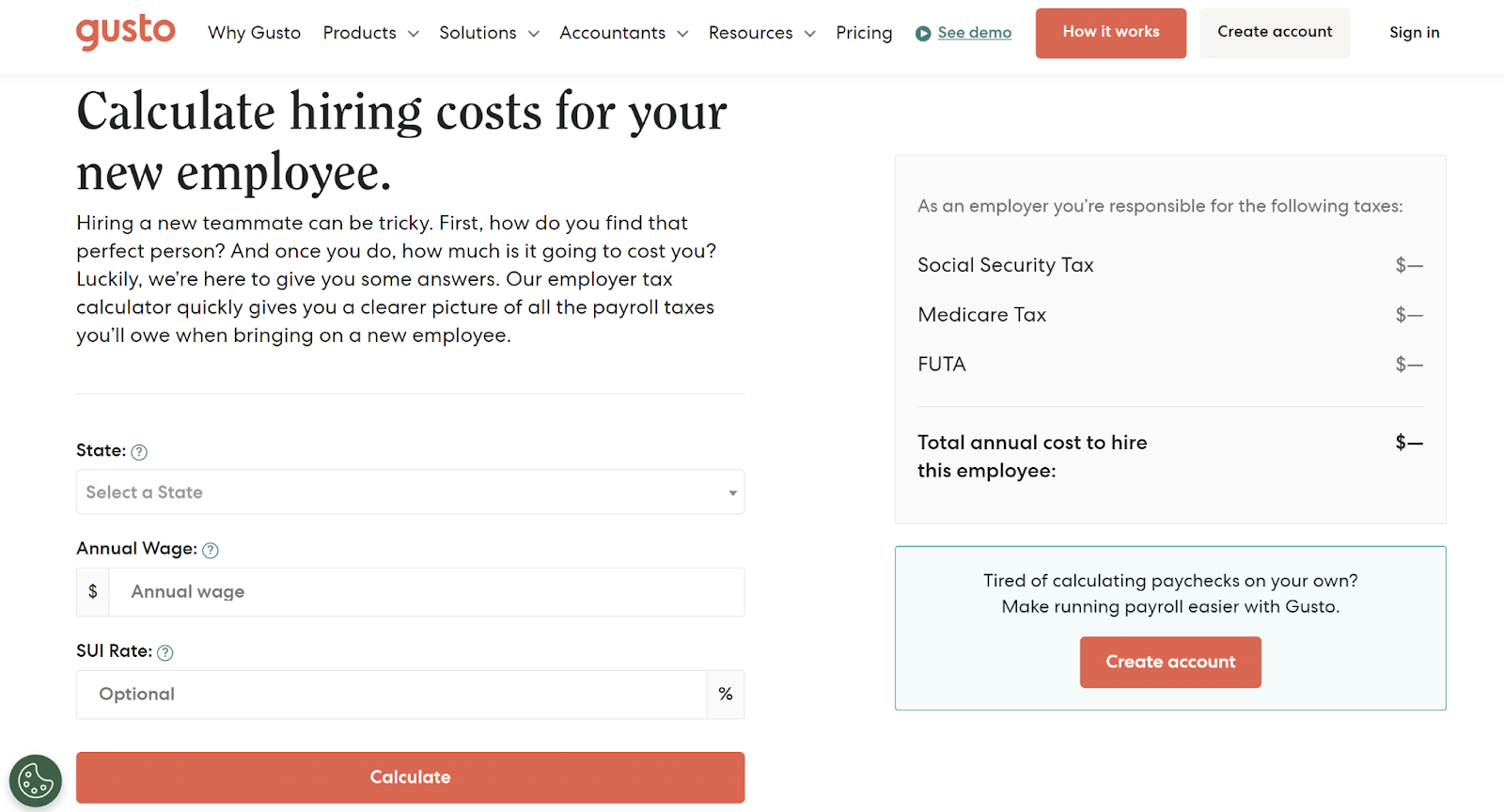
For example, Gusto, a payroll and HR management software offers a free tool to calculate hiring costs for a new employee.
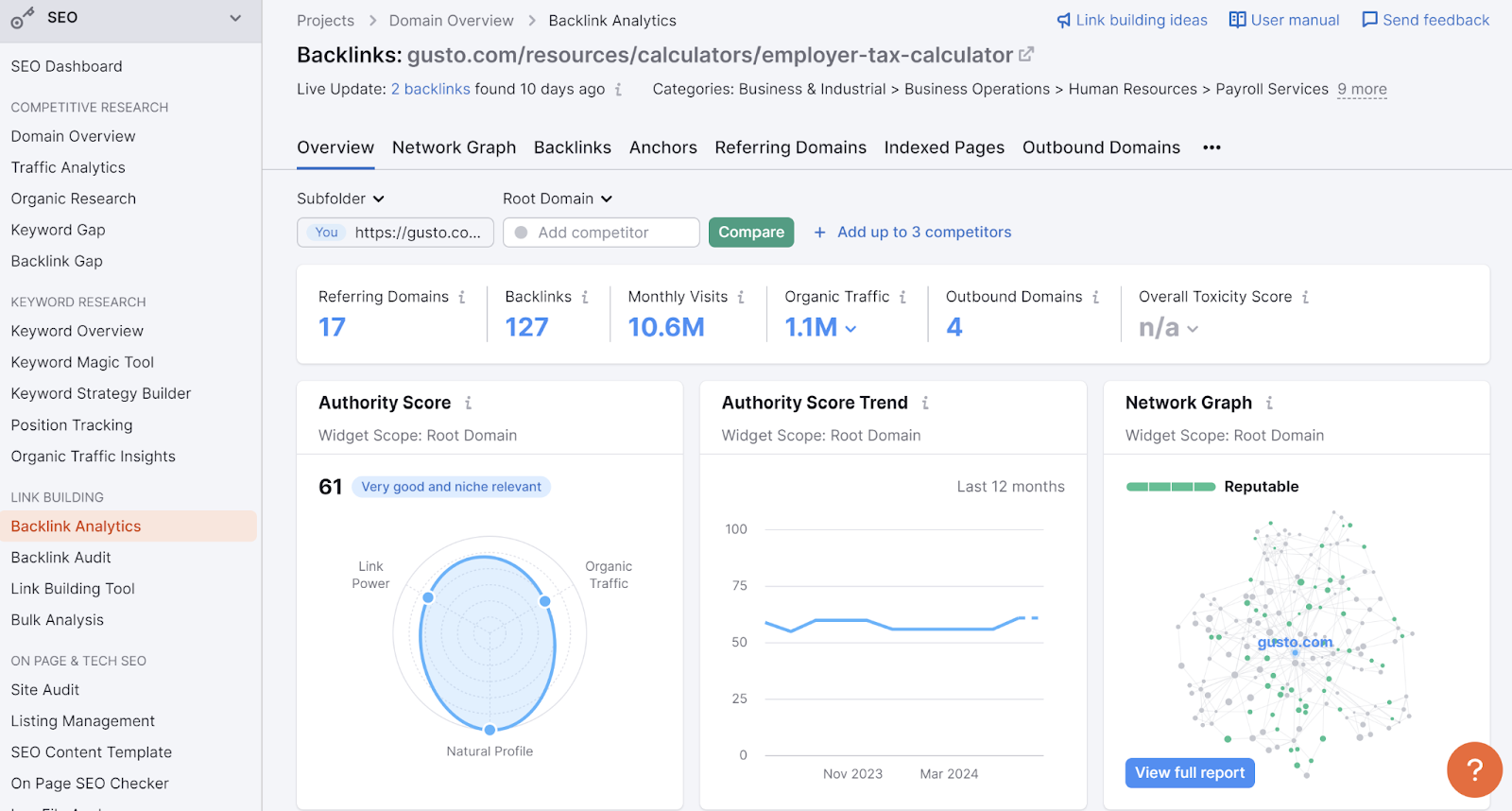
As you can see below, it has a total of 127 backlinks presently that have been growing on autopilot in the past year.

Quick Tips: Ensure the tool is easy to use and genuinely useful. Include a feature that encourages users to share the tool with others, such as social sharing buttons or an email-a-colleague feature.
Conduct surveys or compile data on topics like the latest HR trends, technology adoption in HR, or the impact of remote work on employee productivity. Publish the findings in a comprehensive report that includes data visualizations and expert analyses.
Original research can position your brand as a data-driven leader in the HR software market, attracting backlinks from industry news sites, bloggers, and perhaps even academic researchers.
Besides offering free tools, Gusto leverages this strategy, too. Their team of economists gathers the latest insights from the hundreds of thousands of businesses using Gusto to highlight emerging trends and help small businesses reach their full potential. Leading institutions, policymakers, and media platforms have highlighted the team’s research — earning them very valuable links and mentions from high-authority websites.
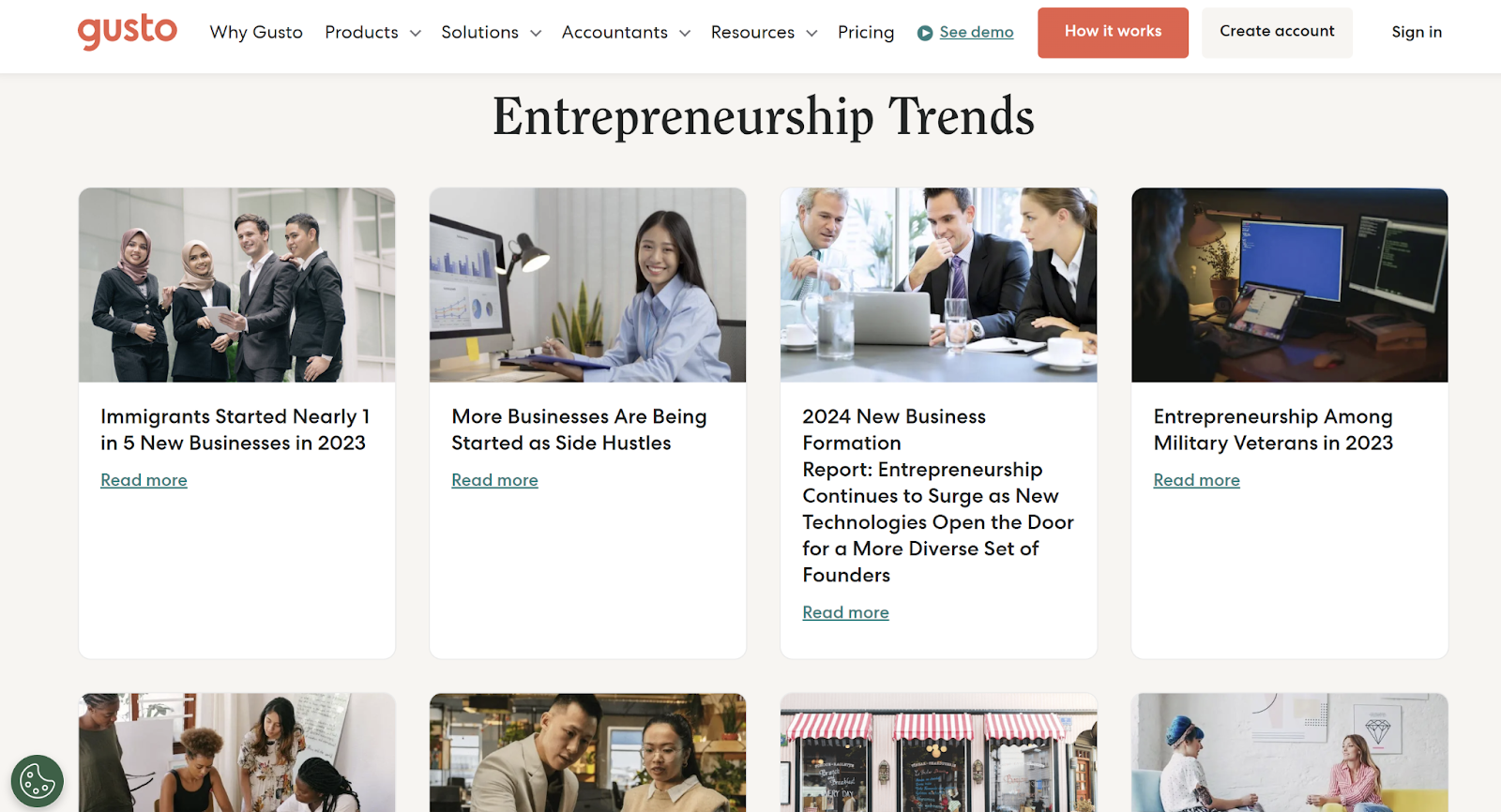
They go a step further and also offer interactive, real-time data on things like remote work trends, hiring and termination rates, average hourly earnings, etc. from Tableau.

Quick Tips: Promote your research through press releases, social media, and by sending personalized summaries to key influencers within the HR industry who might benefit from citing your findings.
Create press-worthy stories about your software, such as significant product updates, notable partnerships, or unique use cases. Distribute these stories to high authority relevant publications, such as HR Dive and Society for Human Resource Management (SHRM).
Consider using digital PR tools like Cision PRWeb for creating and distributing press releases, as it offers robust tracking and reporting features to streamline your PR workflow.
Effective digital PR can lead to high-quality backlinks from news outlets and well-regarded industry blogs, significantly boosting your SEO and brand visibility.
Quick Tips: Tailor your pitches to specific journalists and outlets that cover HR technology. Offer exclusive data or insights to increase your story’s appeal and provide clear, direct links to pages on your site that expand on the news item.
This was just an overview of link building. To dive deeper into each of these methods (and more), check out our complete guide to link building.
Besides building links to your content, you need to push it across other relevant channels and platforms to improve its reach across all your audiences (social media, email, etc.).
That’s what content distribution is all about.
Here are some great ways to distribute and promote your content effectively.
By implementing these strategies, you can effectively distribute and promote your B2B content, ensuring it optimally reaches your target audience, thereby maximizing your content’s potential to generate leads and drive business growth.
As your business grows, so too should your content marketing efforts. In this chapter, we’ll discuss some tips for tracking your content marketing performance and maintaining the efficacy of your content over time.
In Chapter 3, we mentioned the key performance indicators (KPIs) to focus on for different content marketing goals, ranging from brand awareness to sales.
There are a number of key content marketing metrics you need to focus on to measure your content’s performance, assess the impact of your strategy, and make informed decisions to boost future performance. Here they are:
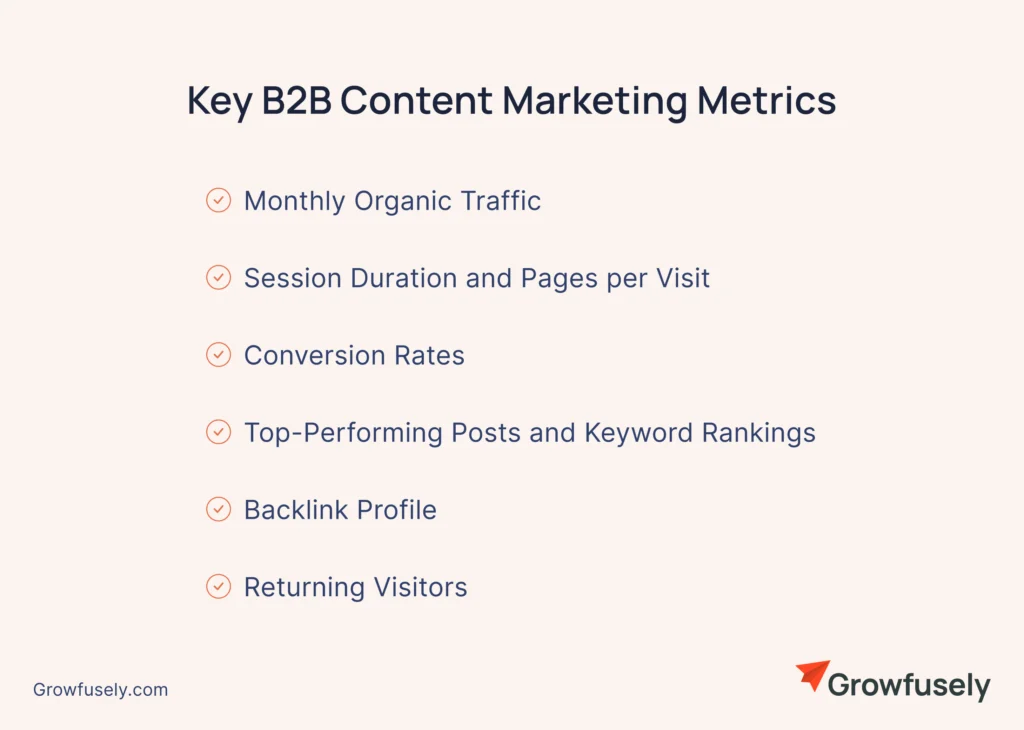
To effectively track the key metrics outlined in content marketing, you can use the following tools:
These tools offer a comprehensive approach to measuring the effectiveness of your content marketing efforts across various aspects, from traffic and engagement to conversions and SEO performance.
Sure, consistently publishing fresh content is an important part of any successful B2B content marketing strategy.
But if you’ve been investing in content for a while, then there are a couple of low-hanging fruits that will help not only maintain the effectiveness of your content but also scale your content marketing to reach more audiences.
These are:
We have detailed articles discussing the what, why, and how of both these strategies, and we highly recommend you go through them:
By “brand-building content”, we mean content that not only educates and engages your audience but also enhances and relays the core values, mission, and unique selling propositions of your brand. This type of content is designed to establish and reinforce the identity of a company in the minds of consumers, fostering recognition, loyalty, and trust. It connects with the audience, offers genuine value, and consistently reflects the brand’s voice and ethos across all platforms.
The Ahrefs blog is a perfect example of brand-building content. Every post (such as the one below) offers unique value, often weaves in their products naturally, and reflects their way of doing business — helping readers connect with the brand.
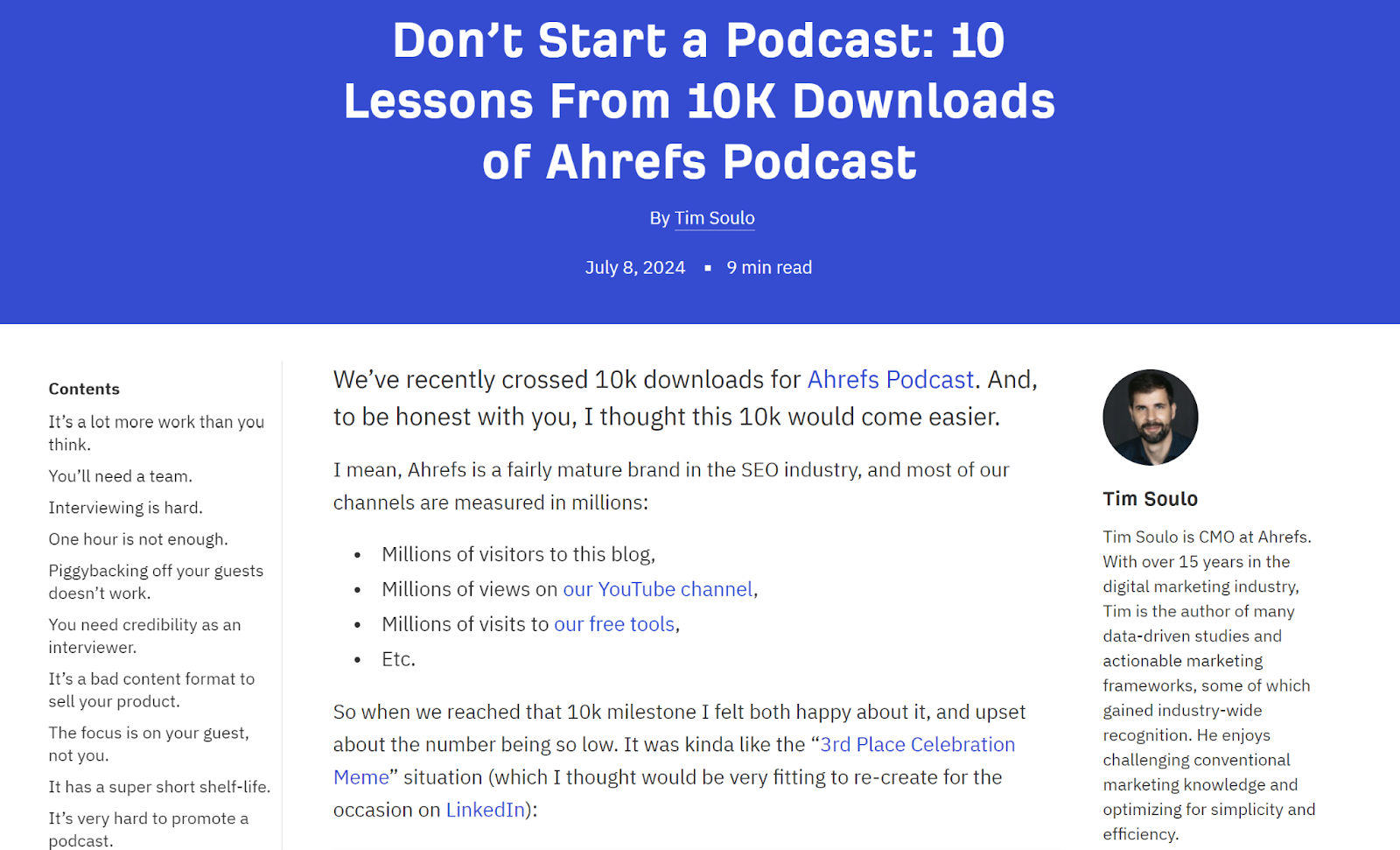
In the age of AI Overviews — wherein Google is generating new content based on all the indexed data (not just curating and organizing existing content) to give users fast and exact answers to their search queries right there on the SERP — you need to eventually focus on a more brand-centric approach rather than an SEO-only approach in your content.
That’s because AI Overviews and similar AI-driven features in search engines will likely tend to favor content from established brands, primarily because such brands are often associated with reliability, authority, and trustworthiness (think E-E-A-T).
Established brands typically have a long history of producing high-quality, reliable content that aligns with search engine guidelines for accuracy and authority. Consequently, AI Overviews are more likely to source snippets from these brands because their content is perceived as more trustworthy.
Brand-building content is a way to set your company apart as a long-standing thought leader, and here are some tips to get you started:
By following these tips, you can shift your focus to crafting brand-building content to differentiate your enterprise and establish it as a thought leader in the eyes of both Google’s AI and your customers.
We are now going to share with you some of the best B2B content marketing examples. These brands not only understand B2B content marketing but also unleash its true potential, creating some crazy good work of their own.
Here’s the list of 6 successful B2B content marketing examples who get it right. Dive into it for inspiration, kickstart your creativity, and brainstorm some fantastic ideas for your company.
Growfusely excels in content marketing and SEO, especially when catering to their target audience of B2B technology companies. They’re not just throwing words around; they create detailed guides that hit the mark.
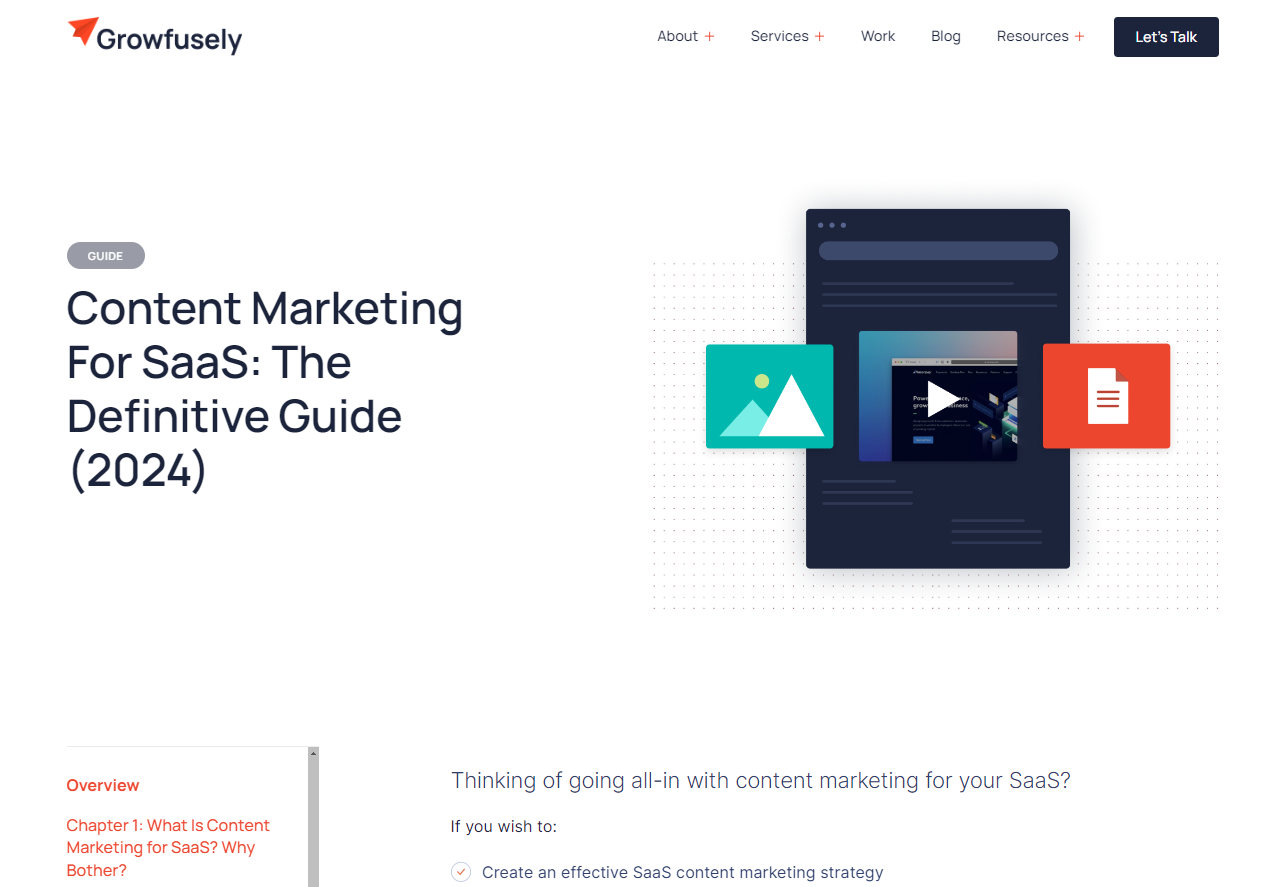
Whether it’s data-driven long-form content or a more relaxed blog post like “Content repurposing,” Growfusely manages to keep things interesting and valuable. The unique thing? Their content writing team knows how to make complex B2B content informative without inducing yawns.
Another noteworthy aspect is their use of data-driven content. Since the B2B crowd is savvy and wants proof, Growfusely delivers, and they deliver hard.
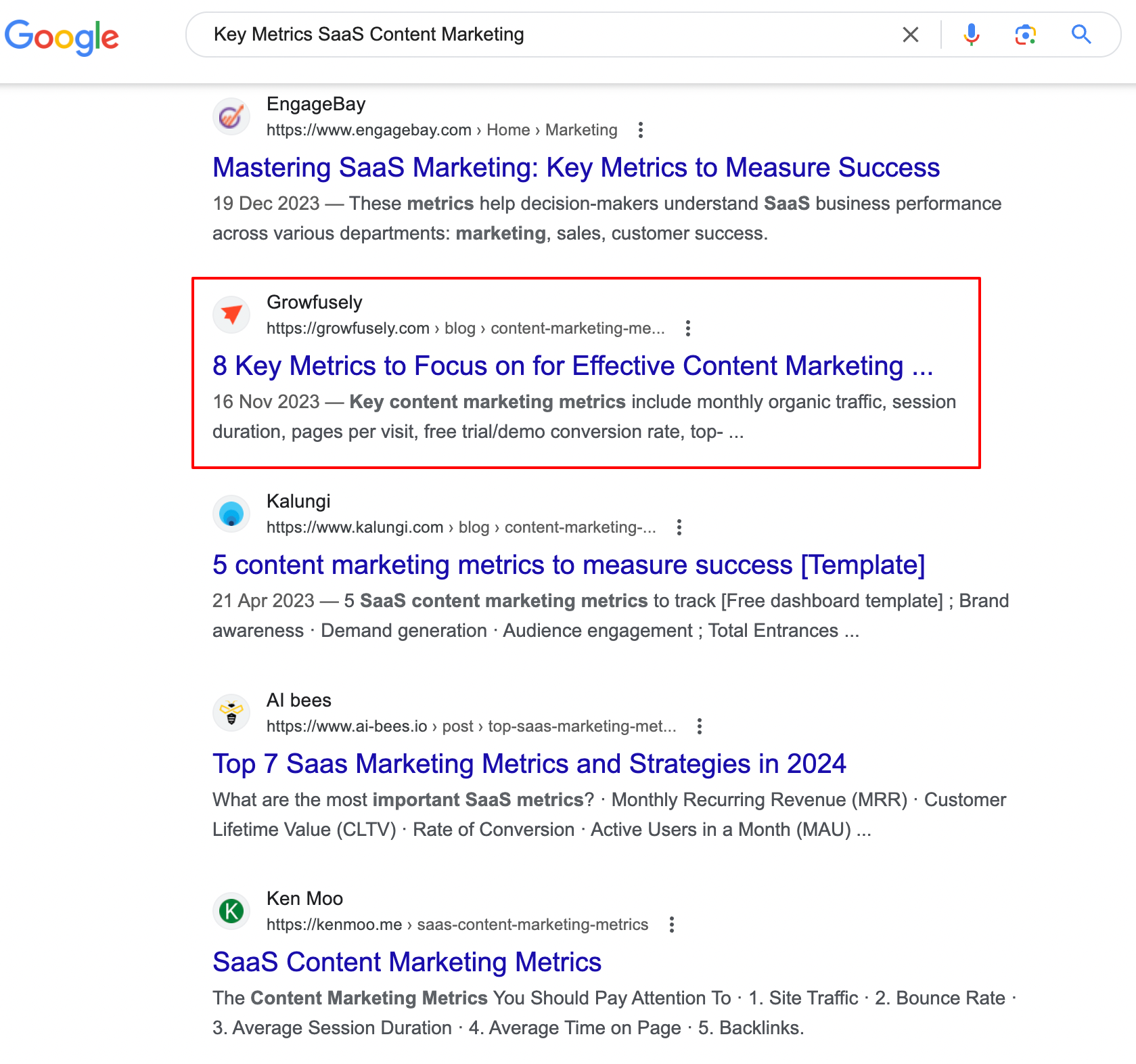
Check out a snippet from their post, “8 Key Metrics to Focus on for Effective Content Marketing as a SaaS.”

The attention to detail and the abundant use of data make it clear that they’re not just talking—they’re educating.
That’s why the guide ranks in the top 5 in Google search results.
Key Takeaways:
Even though 75% of B2B buyers use social media for decisions, pushing intrusive ads on apps won’t cut it. What savvy B2B decision-makers truly crave is valuable content.
As business owners dive into social media for brand research, showing they’re in buying mode, it’s clear. Interacting with them authentically and moving away from generic content is what brings out the best B2B content marketing campaigns for brands.
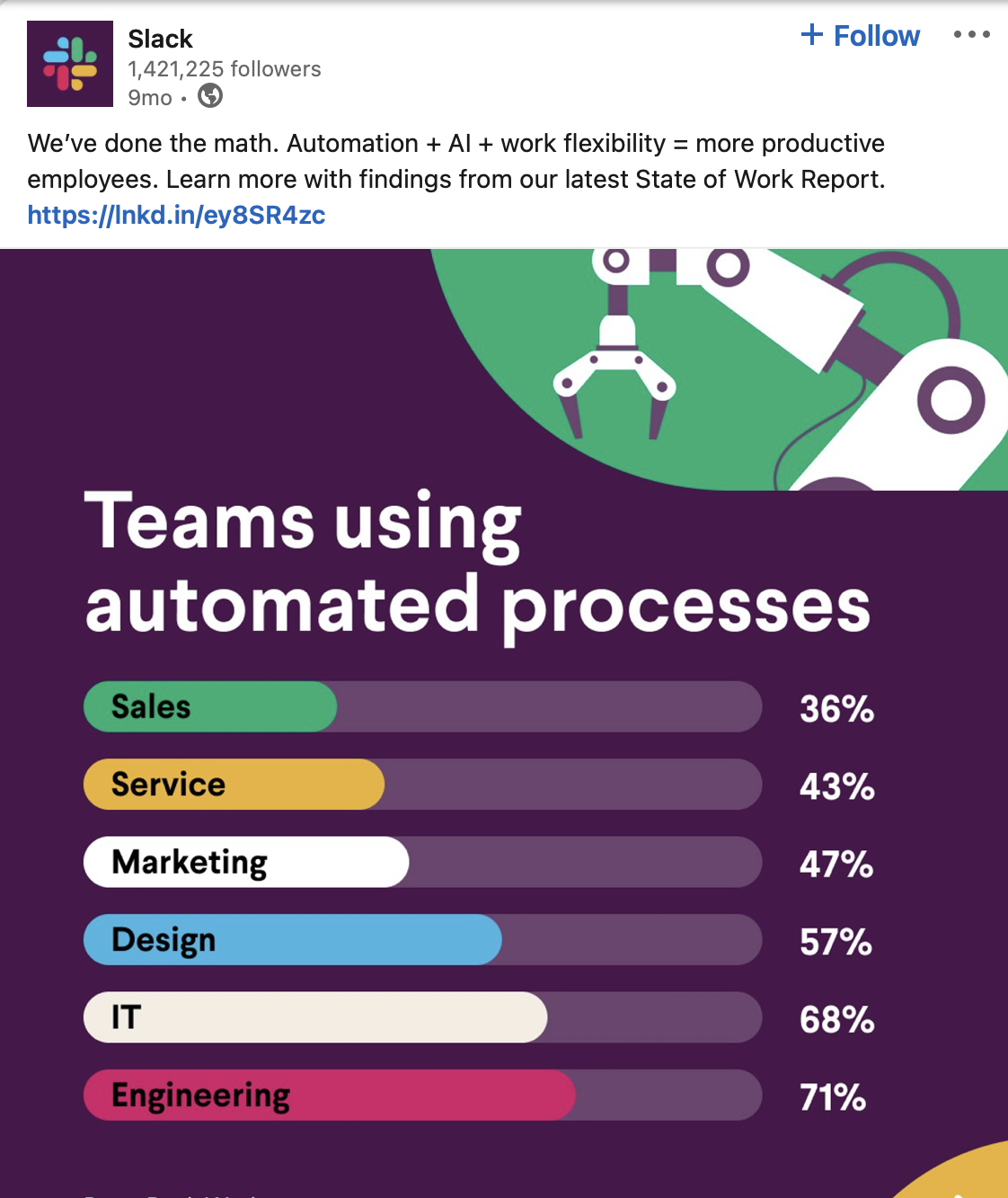
Well, if you’re not sure where to begin, let Slack be your north star for successful B2B content marketing examples.
Firstly, B2B businesses grappling with Instagram bio challenges can learn from Slack’s approach— keep it short and focused on their mission.

Slack makes the most of Instagram Stories and Highlights for showcasing its latest features.

Coming to X (Twitter). It’s an awesome channel for B2B updates and support. Slack does a great job using cross-channel marketing to shine on Instagram too. And when it’s event time, they drop a cool 30-second video and make the event hype real.

Now Slack’s Facebook marketing strategy. It is sleek and minimal—a good example of a great social media copy.
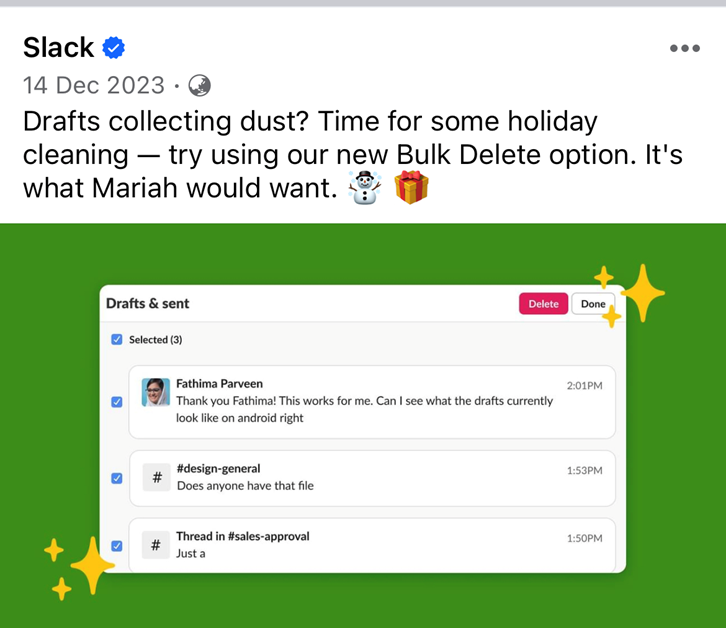
They draw attention with beautiful posts, especially when sharing blog content. They update users on new features and cleverly repurpose content for different platforms.

Most B2B businesses on YouTube post sporadically, but not Slack. They’re active, publishing 2-3 videos weekly with a solid strategy. Thumbnails are sharp, sparking curiosity with color coordination and minimal words. Flawless visual appeal all the way!
Slack’s LinkedIn strategy highlights the value of writing a simple yet effective LinkedIn bio. The About section uses words like “diverse,” “inclusive,” and “equal opportunity,” showing their commitment to employee well-being.
They tailor fun, engaging blogs for Facebook and Twitter, while on LinkedIn, it’s serious and professional, reaching a business-centric crowd. Their LinkedIn ads are intriguing, with videos, photos, and carousels—excellent design and content.
Key Takeaways:
McKinsey, the consulting maestro, excels in presenting case studies that encapsulate complex business transformations with clarity and strategic depth.
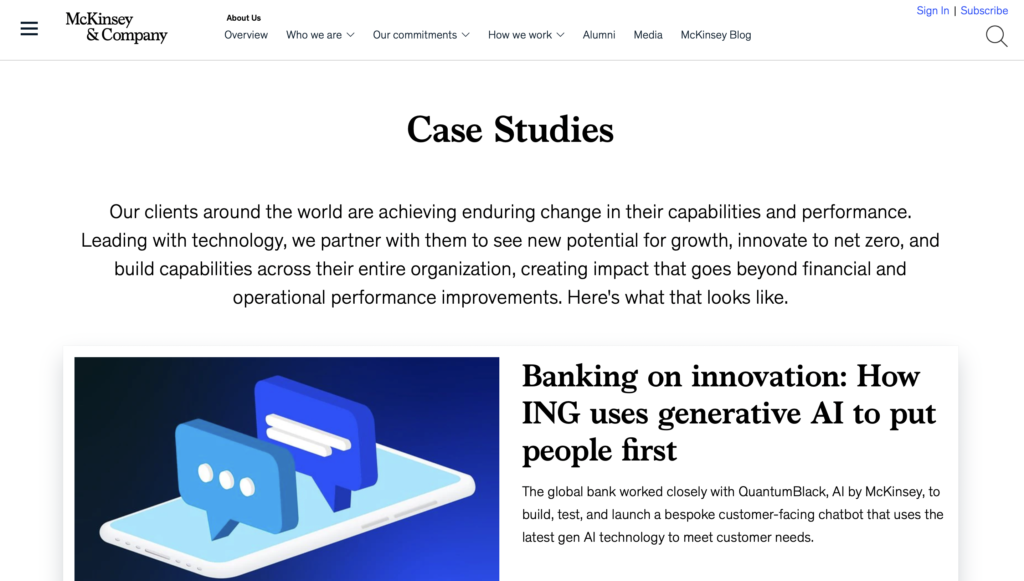
How are they different? Their case studies read like a captivating story rather than a dull report. They transform business narratives into a compelling journey. It’s not just facts; a narrative that begins with a clear depiction of the opportunity, setting the stage for the business challenge and its resolution. The storytelling unfolds logically, providing a comprehensive view of the situation.
McKinsey showcases a client-centric approach, focusing on the client’s objectives and the impact of McKinsey’s intervention. Integrating quotes from key stakeholders adds that human touch. The insights into the client’s perspective make the content more relatable.
McKinsey backs its narrative with numbers and metrics—the real proof that their strategies aren’t just talk.
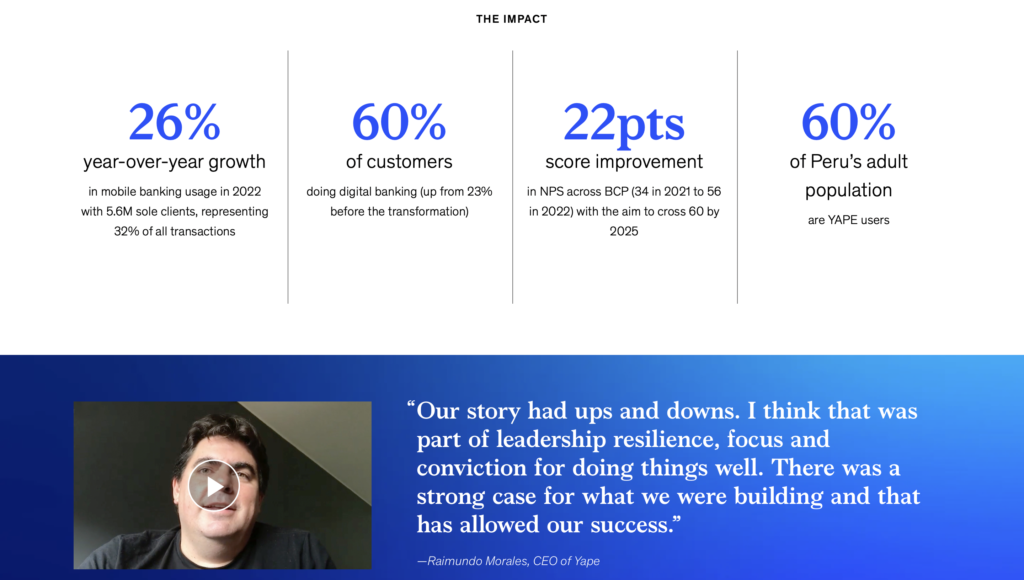
And the language? It’s professional without being boring, expert without being overly technical. The tone is authoritative, instilling confidence in the reader about McKinsey’s capabilities.
Key Takeaways:

Over 464 million podcast listeners globally, expected to reach 504.9 million by 2024!

Judging by the numbers alone, it’s clear that the podcasts wield serious content marketing potential. Over half of marketers are already tapping into it to reach their audience. As this industry expands, it’s smart to include them in your B2B content marketing strategy now and stay ahead of the increasing competition.
For instance, Mailchimp, the maestro of email marketing, diving headfirst into the world of podcasts.
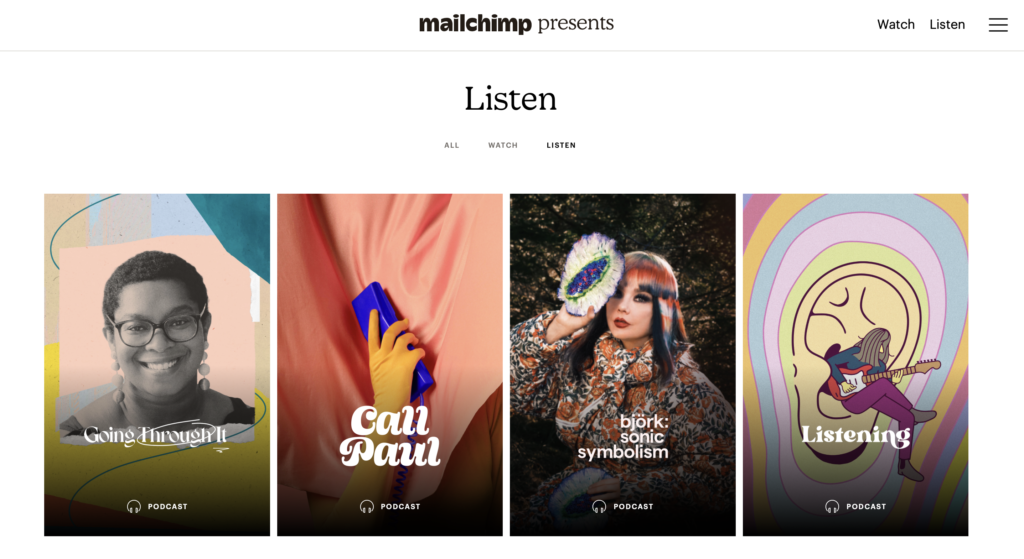
How does Mailchimp pull it off?
Mailchimp goes beyond content creation; they craft an experience that hits home with customers. Diving into the ups and downs of entrepreneurship, their podcasts speak to the heart of the journey. It aims for a real connection without the hard sell.
Variety is the spice of their podcasting life. From interviews to stories, they serve up a content buffet that caters to different tastes, addressing pain points, sharing insights, and adding a sprinkle of humor.
No silos here. Mailchimp’s podcast seamlessly integrates into their broader strategy. Emails mention the latest episodes, social media buzzes with podcast updates.

A standout podcast feature? They provide transcripts. Along with aiding the hearing impaired, it’s a savvy SEO move. A transcript packs in keywords and backlinks, making their content a breeze to find. Smart, right?
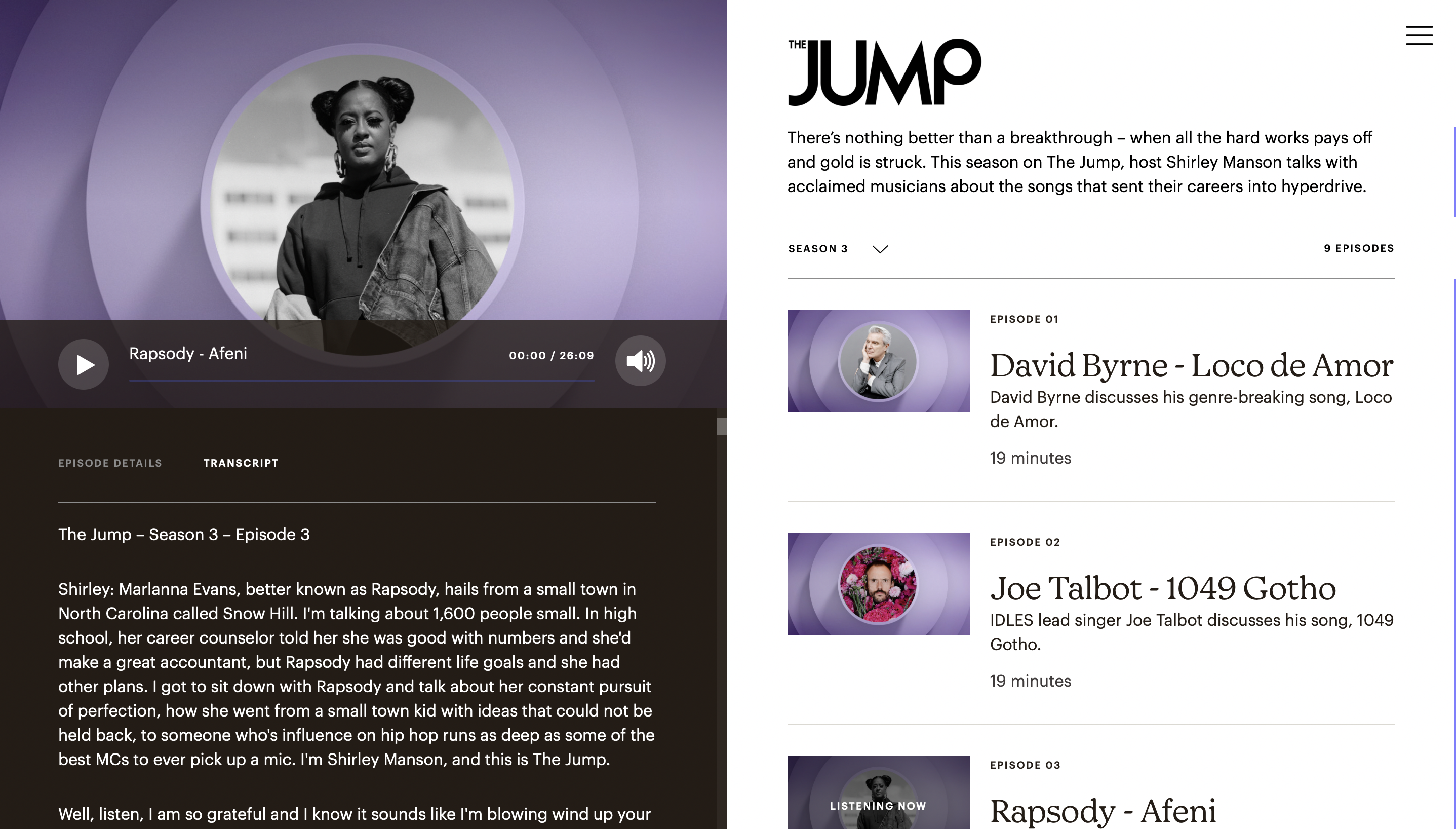
And, as Julie Douglas, the Senior Manager of Mailchimp Studios notes, they keep an eye on analytics – site visits, content consumption, and customer conversions. Yet, it’s not just about numbers; they take a holistic view, understanding how the platform genuinely supports both their audience and creators.
Key Takeaways:
Thought leadership goes beyond sharing expertise – it’s a hub for exchanging best practices, practical insights, success stories, and social responsibility.
Across industries, companies are strategically placing their key figures at the forefront of B2B digital marketing. These leaders become valuable assets for both organizational growth and community building.
While many B2B companies have excellent goods or services, only a few attain the coveted status of thought leaders. Most businesses are easily replaceable, but thought leaders stand out.
That’s why integrating thought leadership into your B2B content marketing strategy is a game-changer. As your business earns trust, it becomes integral to others’ growth, securing a top spot in the market and establishing itself as a respected authority.Deloitte shines as the best B2B content marketing example in thought leadership. Just look at their website, Deloitte Insights – it’s a treasure trove for businesses. They go beyond typical written content, offering industry reports, expert insights, and specialized studies on their services.
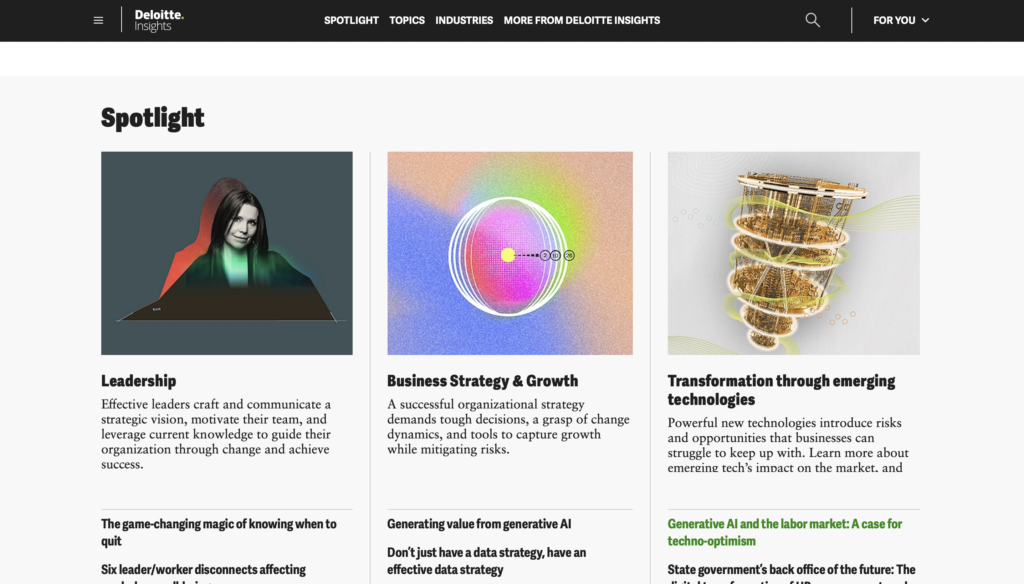
What’s noteworthy is the diversity. Deloitte doesn’t stick to written content alone. The ‘Watch & Listen’ section elevates the experience with audiovisuals. Their videos are eye-catching, and the podcasts are insightful and entertaining — a refreshing alternative for buyers tired of endless written articles.
Key Takeaways:
Semrush’s bread and butter comes from its SEO and content marketing expertise, so it’s no surprise that it produces the best B2B content for itself.
Recognizing that not everyone visiting their site is an SEO pro, Semrush creates an impressive educational content strategy.
They roll out a variety of free courses covering not only how to use their SEO tools but also how users can grasp and apply SEO tactics independently. You can touch upon diverse topics, from technical SEO to keyword research, and even get certificates upon completion.
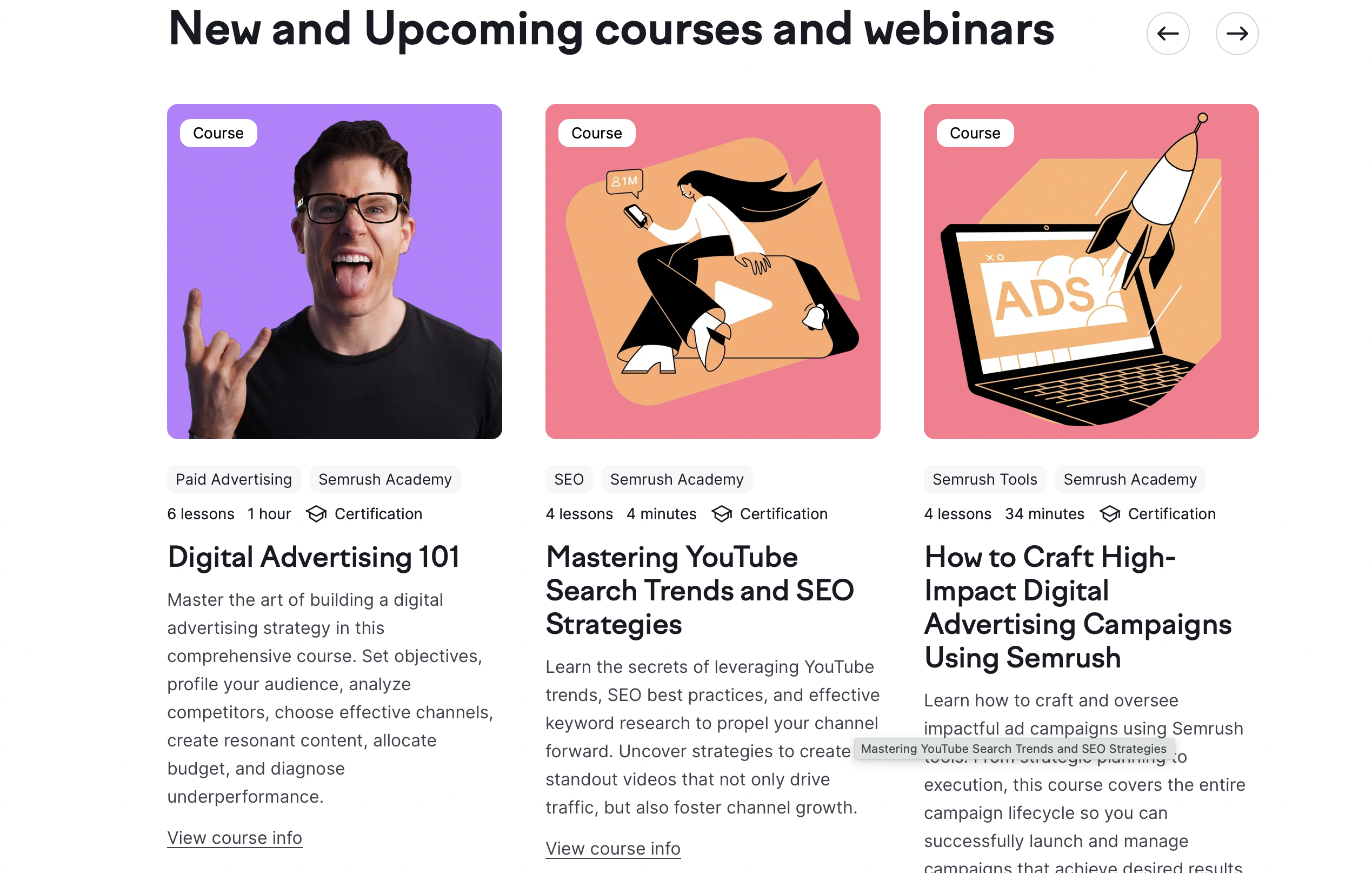
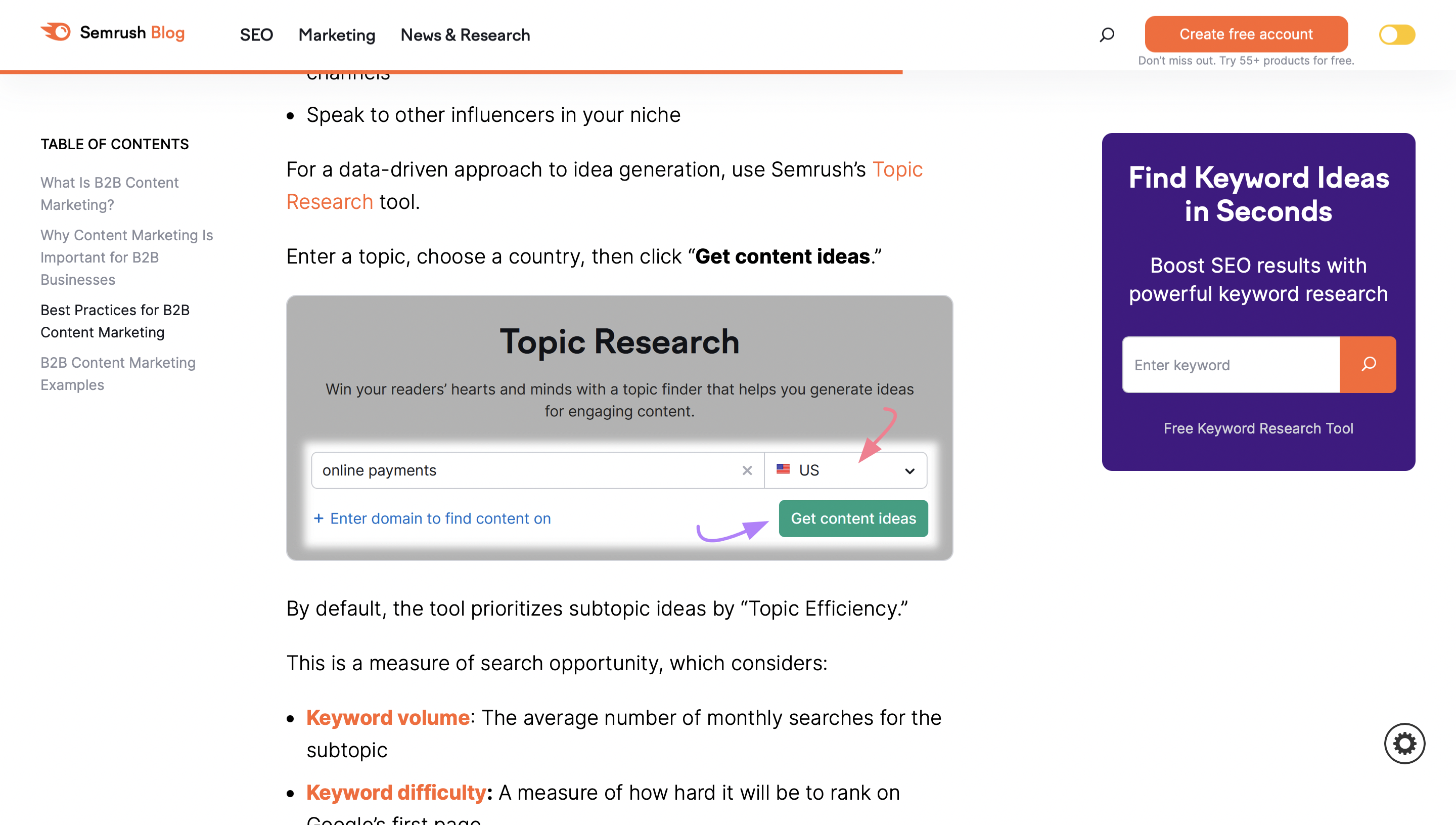
Notice how they seamlessly integrate product-led marketing into courses without making their products the sole focus. This makes Semrush a good example of B2B content marketing.
For instance, look at the way they smartly talk about their Topic Research Tool while explaining content idea generation for B2B content.
Besides this, Semrush offers additional content derived from their original research and data. Then there’s the GoodContent Hub, a treasure trove of resources and tools to elevate your content marketing game.
Being an SEO tool, Semrush implements a robust strategy to enhance its content visibility in search engine results pages (SERPs). Key SEO tactics they employ include Semrush keyword strategy, strategic keyword placement, effective internal linking, and optimized URL structures.
This approach positions Semrush as an SEO thought leader and turns it into a go-to for businesses seeking comprehensive SEO software.
Key Takeaways:
From establishing a solid strategic foundation and creating value-first content for each stage of the funnel, to effectively distributing and maintaining your efforts, each step plays a crucial role in establishing a strong foothold in the search and social web.
Our last bit of advice is that the key to successful content marketing lies in ongoing evaluation and adaptation. Regularly review your content strategy and stay attuned to the evolving needs of your audience, the search engines, and the market dynamics.

Pratik Dholakiya is the Founder of Growfusely, a SaaS content marketing agency specializing in content and data-driven SEO.
Let's find out if we're the SaaS content marketing company you’re looking for.